
Politics
Financial Autonomy May Worsen Inequality Among LGs, Says Makanjuola Yahaya

 Afeeze Ahmed
A real estate developer and grassroots political advocate, Hon. Alhaji Makanjuola Yahaya Lanre, has said that while the recent Supreme Court decision granting financial autonomy to local governments across Nigeria is commendable, it may deepen inequality between wealthy and under-resourced communities if not carefully implemented.
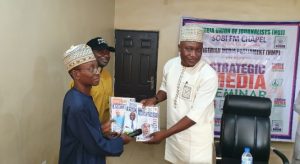
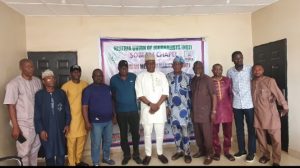
Makanjuola, who is the CEO of Darosa Properties Management and Construction Ltd, and the Chairman of the 02 Liberation Movement and stated this on Wednesday at the 6th Nigerian Union of Journalists Sobi FM Chapel Strategic Media Seminar held in partnership with the Nigerian Media Parliament in Ilorin, the Kwara State capital. The seminar was themed “Grassroots Governance and Security: A Framework for Sustainable National Development.”
The seminar brought together media professionals, local government officials, civic leaders, and policy advocates to deliberate on the implications of financial autonomy for security and development at the grassroots level.
In his address, Makanjuola praised the landmark July 2024 Supreme Court ruling, which upheld the constitutional autonomy of local governments and ordered direct allocation of funds from the Federation Account to local councils, bypassing state governments.
“Without doubt, this decision marks a new dawn for local government administration in Nigeria.
“For the first time in decades, councils can now plan, budget, and execute projects without state interference.”
However, he warned that the new financial freedom also carries potential dangers, particularly in exacerbating economic disparity among local councils.
“Financial independence means local governments now rely solely on what they can generate and what they receive directly from the centre. Wealthier LGAs will thrive. But what happens to rural councils with low revenue bases?” he queried.
According to him, many citizens also misunderstand the capacity and limitations of local governments. “People expect well-paved roads, stable power, quality schools, and healthcare, yet demand lower taxes. That’s not sustainable,” he noted, calling for massive investment in financial transparency and public education at the grassroots level.
He noted that although Ilorin West and other urban councils may quickly benefit from the new arrangement, many others across Kwara’s hinterlands and across Nigeria may fall behind if a national equalisation mechanism is not introduced.
“Democracy works best when citizens can track what their taxes are doing. But it also fails when some areas can’t even generate enough to pay staff or clear refuse,” he said.
Makanjuola advocated for a balanced approach that promotes fiscal autonomy while encouraging intergovernmental support and equity-based redistribution. “Let autonomy not become abandonment. The federal government must step in with policy safeguards,” he said.
He also linked local government independence to improved community-based security, saying empowered councils could help tackle rising cases of kidnapping, rural banditry, and youth unemployment, which are all symptoms of weak local governance structures.
“The battle for true federalism is not just at the national level it starts with your ward councillor, your LG chairman, and how your Naira is spent.”
Ends
-
Education11 months ago
Unilorin honours Oloyede, Olowolafe, Nandap, Omotowa, Thisday MD, 60 others at 50th anniversary
-
Metro11 months ago
Ipe community urges Gov . AbdulRasaq to intervene in land dispute to avert crisis
-
Education11 months ago
Oloyede,Balogun laud Unilorin’s honorary awards
-
News1 year ago
Kwara delegation visits Shonga, begins probe of rice plantation flooding ▪︎ Donates relief materials as victims lose huge farmlands to flood
-
News7 months ago
Offa/Ipe Land dispute :Court grants Ipee community leave to Appeal judgment
-
News1 year ago
Kwara Gov names iconic projects after president’s wife, ex- Gov Bamigboye, Innih,Lawal, Rashidi Yekini others – First lady to inaugurate projects Jan 28 and Jan 30.
-
Metro1 year ago
‘Rescue my constituency, from incessant attacks of bandits, kidnappers’ -Lawmaker calls on President Tinubu,Gov AbdulRazaq, IGP others
-

 Religion11 months ago
Fufeyin Did Not Endorse Fraud, Says CMDM Member in Rejoinder to CAN